
How to live an Intuitive life
Living intuitively is a process of using the body to guide us through life. The body does not lie and is an integral part of all creation. Initially, we use techniques to help us understand what the body is telling us. Later, as we evolve, we listen to the body directly.
To listen to the body, you will need four skills:
Precision
Tap to explore
Precision
A precise technique to access the body’s wisdom through binary questions is essential. Clear yes or no answers remove much of the ambiguity when creation speaks to us.
Singular Intent
Tap to explore
Singular Intent
The ability to clear the mind and sustain a focused, singular intent may sound difficult. But for this method, you only need a few seconds of clarity. With a little practice, it is not difficult at all.
Restrictions
Tap to explore
Restrictions
Knowing which questions to ask is critical. There are some things we are not meant to know at this time. Fortunately, learning this discernment is easier than you might think.
Detachment
Tap to explore
Detachment
Detachment — ahh, this is the rub. Before we can ask a question of the body, the mind must reach a kind of equanimity — absolutely open to either a yes or a no. More on this later. Just know that this method of working with creation is an extraordinary opportunity to evolve.
You will also need to understand:

Contraction
Tap to explore
The Body Protects

Living organisms contract when exposed to a negative environment. When we are cold, frightened, anxious, or threatened, our entire system pulls inward. This is the body’s natural protective response.

Expansion
Tap to explore
The Body Opens

An organism expands when exposed to a positive environment — love, warmth, safety, reassurance. The body naturally opens and relaxes in the presence of what supports life.

Yes or No
Tap to explore
The Body Responds

When we pose a question to our physical body, through its inherent connection to Spirit, it will either contract or expand. A “yes” creates expansion — a positive environment. A “no” creates contraction — a negative environment. The body speaks clearly.

Asymmetry
Tap to explore
No Body Is Perfectly Balanced

Our bodies are not symmetric. We are left- or right-handed. We carry old injuries. Our spines are never perfectly straight. There are no perfectly symmetric human bodies. This asymmetry is essential to the technique.

Two Sides, One Truth
Tap to explore
A Clear Answer

When we pose a question to our physical body with single, focused intent, the body — through its inherent connection to Spirit — answers by either contracting for no or expanding for yes. Since we are asymmetric, by measuring the difference between our two sides, we have a clear physical manifestation of the answer.
The Practice
Regardless of the method you use to ask questions of the body, follow these steps:
1. Clear Question — Develop a clear, non-subjective question that can be answered with yes or no.
2. Access — Make sure you have access to the information.
3. Detach — Detach yourself from the outcome.
4. Focus — With focused intent on only the question, perform the action.
5. Act Immediately
Once you get your answer — and this is the most important step — act on it.
Hesitation only adds to the suffering of you and all who share this world.
The Three Methods
Choose the method that feels most comfortable to you. Each uses the same principles — your body’s response to positive and negative energy, plus your natural asymmetry.
Method 1: “The Tool”
My preferred method — uses your whole body and eliminates outside influence
Bent forward, arms hanging
Standing, hands together
The Setup:
Stand with feet shoulder-width apart. Bend forward from the waist until your arms hang freely in front of you — about a 45-degree angle.
The Movement:
Let your arms separate naturally, then bring them together in a wavelike motion so your fingertips touch last. Keep your hands together without changing their relationship to each other. Now straighten up, bringing both hands up in front of your chest by bending your arms. You can now observe any difference in arm length.
Calibration (Essential):
Before asking unknown questions, you must calibrate your body’s response. Hold a single, focused question in your mind — something you know unequivocally. Many people start with biological sex: “Am I male?” or “Is my name [your name]?”
With that question clearly focused, perform the movement. Note how your hands align. Then ask the opposite question and repeat the movement. There should be a difference between positive and negative responses — what matters is that you learn YOUR pattern.
Using the Method:
Once calibrated, you can ask questions you don’t know the answer to. Your body, through its connection to creation, will respond.
Method 2: Two Person Test
Requires a helper — useful if Method 1 is difficult for you
Person lying, helper at head
Helper at feet if arms difficult
⚠️ Critical: Keep Your Helper Neutral
Never tell your helper what questions you’re asking or what answers you expect. They must remain neutral — ideally with an empty mind, acting like a machine.
The Setup:
Lie flat on your back on a firm surface (floor or massage table). Your helper sits at your head. Raise your arms above your head so the helper can hold both your wrists comfortably.
The Movement:
Signal when you’re ready to ask your focused question. Once you’re concentrating on the question, your helper pulls equally on both arms while turning your palms toward each other. Flatten your hands and fingers as they come together. Compare hand lengths, just like Method 1.
Alternative (for arm difficulties):
Your helper can work from your feet instead, pulling equally on both legs and comparing heel positions.
Calibration:
Use the same calibration process as Method 1 — questions with known answers first.
Method 3: The Pendulum
An excellent alternative
Proper grip and stance
Different weights and strings
The Tool:
Any weight on a string — a coin on thread, a crystal on a chain, even a brick on rope. As long as the weight moves freely when you hold the other end, it’s a pendulum.
The Theory:
Your body still responds differently to positive and negative energy. These subtle responses travel through your hand to the pendulum, creating movement.
The Technique:
Hold the string between two fingers. Generate your single, focused intent and observe the pendulum’s movement. For some, “yes” is forward-and-back motion; for others, it’s clockwise or counterclockwise circles. Calibration is essential.
Two Approaches:
Wait method: Hold the pendulum steady and wait for movement. Takes patience and sustained focus.
Initiate method (my preference): Start with simple back-and-forth motion with no question in mind. Once you have the question focused, let the pendulum show you its response.
What to Avoid:
Don’t use charts or maps under your pendulum like a Ouija board. Too much room for the mind to interfere.
Regardless of Method
All three techniques require the same five steps: Clear Question → Access → Detach → Focus → Act Immediately
You have the tools. Now lets master the craft.
How to ask questions

Do You Have Access?
Tap to explore
Not All Answers Are Available

First, determine if you even have access to the answers you seek. Some questions may not be available to you at certain times.
Understand: you may not be ready to hear the answer, or hearing it may not serve your evolution. There is a plan for you—knowing the plan may interfere with the plan.
Enjoy the surprises!

Who Is Asking?
Tap to explore
The Small “i” and the Big “I”
If you ask from the small “i,” you will usually get whatever answer the small you desires. That answer may or may not be what you—and the rest of the world—actually needs.
When you ask from the big “I,” as it relates to the highest good of yourself and all who share this world, the chance of receiving an answer that truly serves is much greater.

Predictions Are Tricky
Tap to explore
The Only Constant in the Universe Is Change

Everyone wants to know what is to come. If you feel driven to ask about the future, you must:
First, confirm you have access to the information. Second, recognize it is only a prediction based on the now — things change. Third, know that it is very difficult to remain unattached to the future.

The Only Good Question Is…
Tap to explore
One That Serves the Highest Good

Preface your question with: “Is it for mine and the planet’s highest good to…” then add your specific query.
Is it for mine and the planet’s highest good to eat this food? Date this person? Take this job? Receive this treatment?
This framing increases your chances of accurate answers.
How To Be detached—The Challenge
By far, the most challenging part of following an intuitive life is achieving a state of equanimity regarding our life choices. It is truly a battle between the mind/ego — determined to have its own way — and your spirit — determined to help you become the best possible you.
Anyone who tells you to “just let go” of your attachment does not really understand the intensity of the struggle. Fortunately, when you commit to this path of making good decisions that serve not only yourself but all those around you, Spirit will help.
And the help of Spirit is no small thing. Do not underestimate the power of your commitment to truth.
Focused Intent
Generating a focused intent is not the passive Zen meditation of quieting the mind and observing its antics. Instead, it is an active, warrior-like effort of focusing on a single thought without deviation.
How long can you actually stop the mental chatter? For most of us, stopping the mind for even 10 seconds seems impossible — and yes, for most people it is.
However, the elegance of Intuitive Living is that you only need 3 or 4 seconds. This is absolutely doable.
Below are a few simple exercises you can do to learn — very quickly — how to focus the mind for the needed few seconds.

Focus on a Sound or Mantra
Tap to explore
We Are One

A mantra describes a state—and is the state itself. By repeating the word, sound, or phrase, we become that state. The mantra Om is the living sound of unity; when repeated, it instills the experience of unity.
Take your pick, or find your own. Practice even five minutes a day.
Christianity: Maranatha
Hinduism: So’ham
Buddhism: Om Mani Padme Hum
Taoism: Qing Jing Jing
Islam: La ilaha illa Allah
Judaism: Baruch Hashem
Indigenous: “Great Spirit, guide me.”
How to Practice: Sit or stand. Repeat silently on the exhale, 5–20 minutes. Or try moving meditation—repeat your mantra as you walk or run.

Focus on a Symbol or Yantra
Tap to explore
Seeing Beyond Illusion

A yantra is a visual pattern that entrains awareness into non-ordinary perception. The more focused you are, the stronger the effect.
As you develop concentration, achieving 5 or even 10 seconds of focused intent becomes easy. Yantras are doorways into the teachings they represent — not just pretty pictures.
How to Practice: Find a yantra that speaks to you. Sit comfortably. Soft gaze—don’t stare. Breathe slowly. When eyes tire, close them and see the yantra internally. 5–20 minutes.
There may come a time when you are the yantra.
Yantras for Meditation
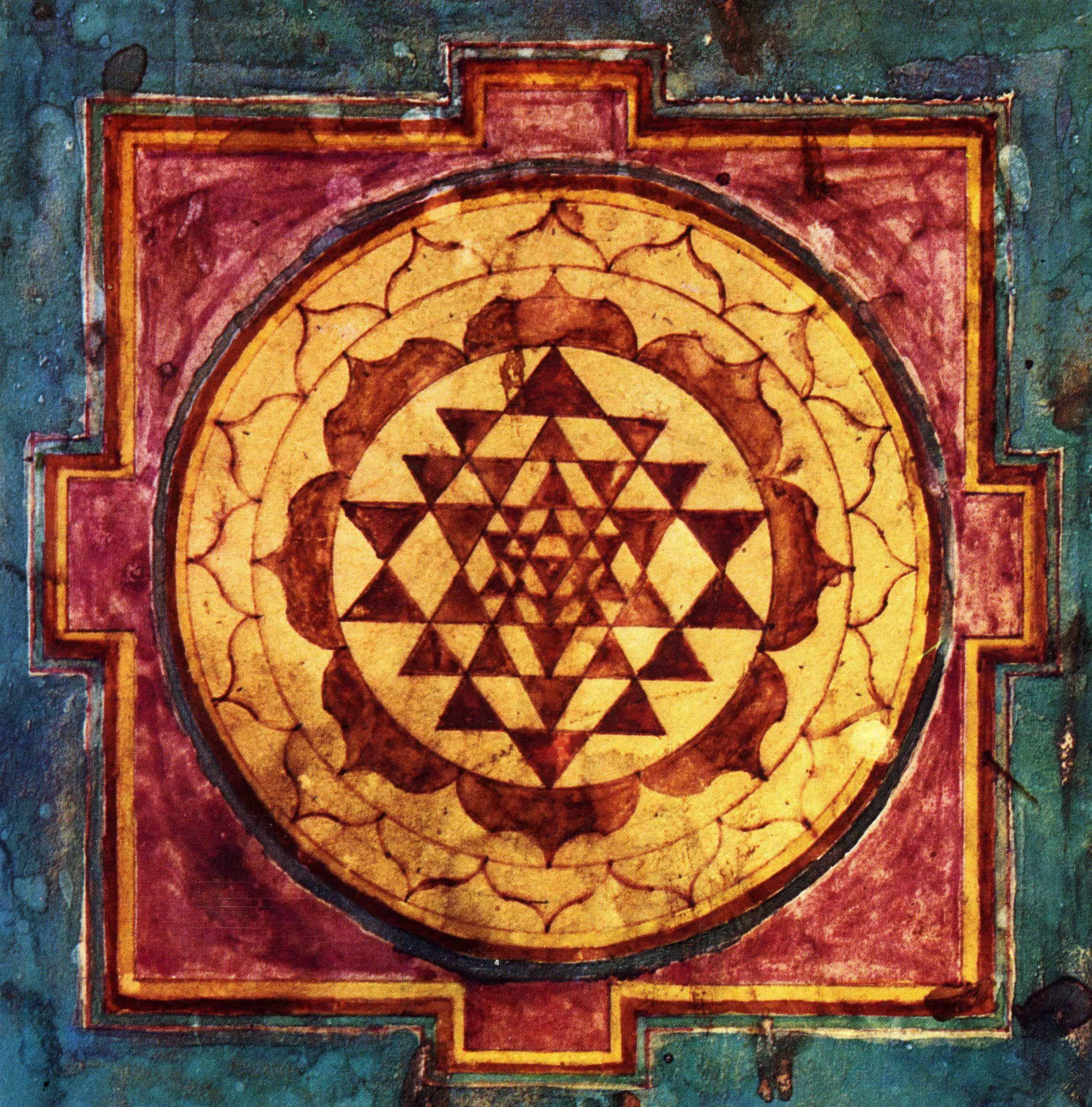
Sri Yantra
Hindu Tantra

Medicine Buddha
Buddhist Iconic Mandala

Christ Pantocrator
Christian Icon (Byzantine/Orthodox)

Kabbalah—Tree of Life
Mystic Judaism

Rub el Hizb
Islam/Sufism

Practice Taoist Yoga
Tap to explore
Physical Mysticism

True Taoist yoga is a cultivation of one’s life force with the eventual goal — as in all true spiritual paths — of facilitating the evolution of all sentient beings.
The internal yoga of the Taoists recognizes that intent is what creates change — initially working to develop a laser-like focus, then applying that focus to evoke first internal change, and then healing for others.
One of the most attractive aspects: you do NOT need to understand. You only need to practice, and knowing naturally occurs.
A word of caution: Beware charlatan philosophers, schools of great expense, or those who have put themselves above others. They have not truly embraced the Tao.

Brute Force Method
Tap to explore
A Warrior’s Way

The brute force method is simple: Sit, stand, or lie down—and by sheer will, stop thinking.
How hard can this be? Very.
Keep a pad of paper next to you. When you wake up enough to realize you’ve been thinking for the last ten minutes, write down what you were thinking about. Then go back to stopping thought.
This is not Zen meditation. This is a true battle of essence over ego.

Mind Overload
Tap to explore
No Place for Idle Thoughts

Many spiritual traditions use mental overload to create distance from the illusion of self. What they have in common: performing multiple tasks all at once.
Gurdjieff: Precise movements, internal counting, emotional neutrality, and self-observation—simultaneously.
Mevlevi Sufis: Spinning in place, left foot grounded, repeating Allah with each step, arms held high, head turned toward the heart.
Tibetan Buddhism: Visualize a deity, recite a mantra, regulate breath, maintain posture—while staying empty and aware.
Getting a mind to do something that makes the mind disappear can be difficult.
This is warrior’s work.
Alpha Heat® — A Cautionary Tale
The Arica Institute® was a mystical school started in the 70s, developed by Oscar Ichazo. The main purpose was to bring as many individuals into high levels of consciousness as possible, with clear dedication to the evolution of all sentient beings.
The coursework was intense — initially one or two month-long trainings designed to help us become aware of the entire map of our ego and psyche. As our awareness increased, the trainings became more mystical and alchemical, focusing on refining the witness — that part of us which observes but does not judge.
One training was called Alpha Heat®. It was deeply alchemical — we meditated three or four hours per day using symbolism and imagery to ritualize the battle of essence over ego, of who we truly are over the illusion of self. The training lasted about five weeks, meditating every day.
Midway through, I was upstairs deep in meditation when I heard the shower going downstairs. I lived with four or five other people from the school, including my girlfriend. This particular girlfriend was clear that we were in an open relationship. I, however, was not. She was the best teacher I ever had about letting go of jealousy.
I heard the shower, and the thought crossed my mind that she was downstairs with another man. I tried so hard to focus back on the meditation. However, in one of my most impressive fails, I could not get that thought out of my head. I could not transcend it.
I leaped from my meditation altar, ran downstairs, threw open the shower curtain — and of course there she was, by herself, with this bewildered look on her face.
The battle of essence over ego? Not so easy.